Markus Büsges (leomaria design) für Wikimedia Deutschland e. V. (2014). OER Logo Open Educational Resources. Wikimedia Commons. https://commons.wikimedia.org/wiki/File:OER_Logo_Open_Educational_Resources.png. This file is licensed under the Creative Commons Attribution-Share Alike 4.0 International license.
What Is OER?
Open Educational Resources (OER) are “teaching, learning and research materials in any medium – digital or otherwise – that reside in the public domain or have been released under an open license that permits no-cost access, use, adaptation and redistribution by others with no or limited restrictions.” (William and Flora Hewlett Foundation, 2020)
- Open – Openly Licensed to Support “5R” Benefits – Retain, Reuse, Revise, Remix, and Redistribute.
- Educational – Designed for educational use.
- Resources – Materials that support teaching and learning, including textbooks, video, assessments, etc.
OER Starter Kit, by Abbey Elder
This starter kit has been created to provide instructors with an introduction to the use and creation of open educational resources (OER).
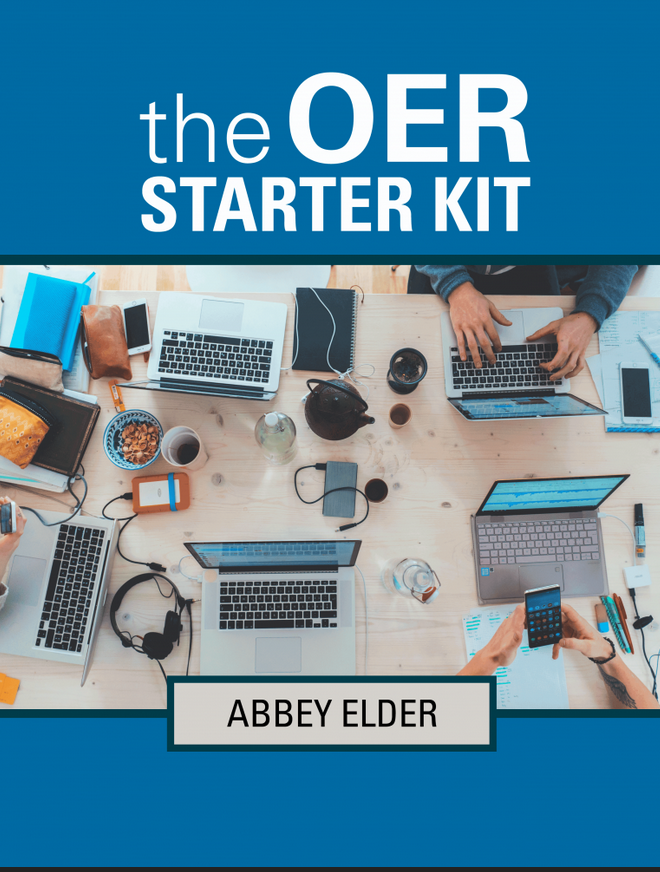
Elder, A.K. (2019). The OER Starter Kit. Ames, IA: Iowa State University Digital Press. DOI: https://doi.org/10.31274/isudp.7
Additional Resources
Here are some additional resources you may review as you begin your OER journey:
How It Works
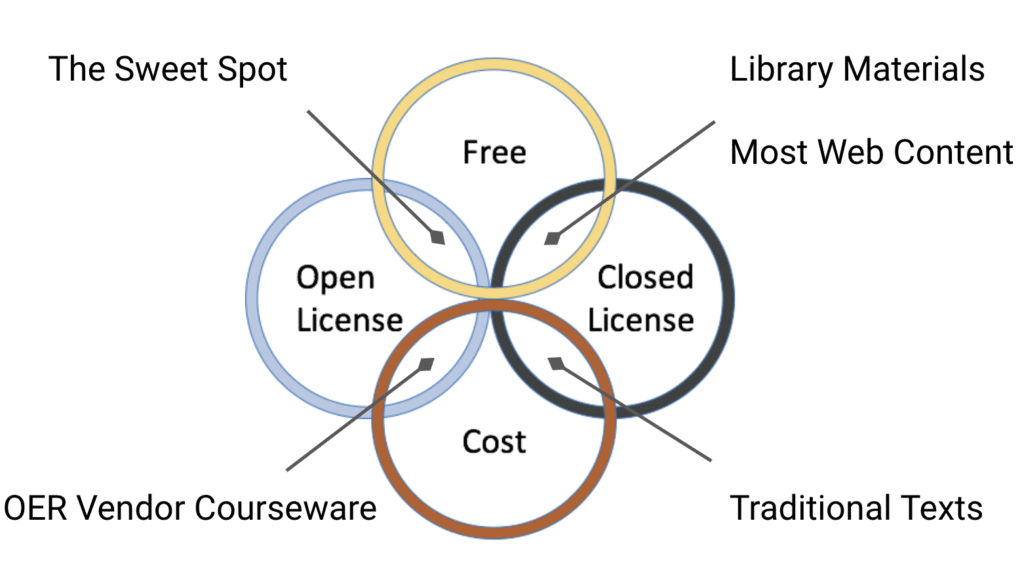
OER has two components: license and cost
License: OER are released with either a Creative Commons license or reside in the public domain. These licenses allow for revising, remixing, and redistributing course materials.

Cost: OER are often available at no cost, also known as Zero Textbook Cost (ZTC), or low cost to students. CUNY has provisions for designating courses taught as ZTC or low cost classes. Learn more about the CUNY ZTC designation in CUNYfirst.
Creative Commons
Types of Licenses
The licenses below and their descriptions come from the About the Licenses page of Creative Commons.
CC0 Public Domain Dedication Attribution
Attribution, CC BY
Attribution-ShareAlike, CC BY-SA
Attribution-NoDerivatives, CC BY-ND
Attribution-NonCommercial, CC BY-NC
Attribution-NonCommercial-ShareAlike, CC BY-NC-SA
Attribution-NonCommercial-NoDerivs, CC BY-NC-ND
Public Domain
There are no restrictions on using works that are in the public domain, which means you can use them however you want—short of claiming that you created them yourself. Unfortunately, it’s not always easy to tell whether or not something is in the public domain. There may be some cases when you know for sure that a work is public domain (for instance, if you find a photo or text you are sure was published before 1924), but for the most part, the best way to find public domain content is to search for it specifically.
Public domain refers to materials for which:
- The copyright has expired;
- The copyright owner has intentionally and explicitly “dedicated” it to the public domain;
- The copyright owner did not follow copyright renewal rules; or
- Copyright law does not protect (such as works created by U.S. Government employees during the course of their employment, and works that cannot be copyrighted (such as ideas, common knowledge, data points etc.))